


















Why Airpower Will Define India’s Security Strategy in a Changing Global Order
As global power politics return, India faces new security challenges. Airpower, space and cyber capabilities will be central to deterrence, strategic autonomy and regional stability.

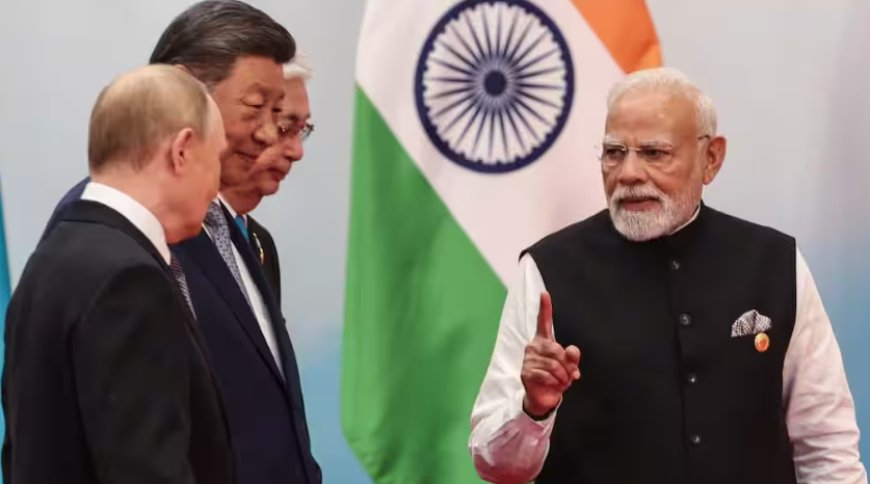
The global system is undergoing a transformation unlike anything seen in the past hundred years. For decades after the Cold War, international politics was anchored in US leadership, expanding global trade and a rules-based order. That framework is now eroding. Power politics is returning to the forefront, increasingly shaping outcomes directly rather than through institutions. For India, this shift is not abstract—it has tangible implications for national security, economic resilience and strategic independence.
A key feature of this emerging era is that major powers are no longer pursuing narrow or time-bound goals. Their ambitions are broad, long-term and continuously expanding. Russia aims to exert sustained influence over Europe’s political and security architecture. China’s objectives go beyond economic growth; it seeks to reshape Asia and challenge American dominance. These are not short-term manoeuvres but deeply rooted strategic pursuits.
As international institutions lose authority, powerful states are more willing to bypass established rules. Trade restrictions are used as political weapons, sanctions have become routine and military force is openly applied to change realities on the ground. Bodies such as the United Nations and the World Trade Organization are increasingly unable to restrain such behaviour. For countries located in zones of strategic competition—India chief among them—this results in a far more demanding security environment.
Asia: The Centre of Global Rivalry
Asia has emerged as the primary theatre of global power competition. China’s rapid military expansion, tensions surrounding Taiwan and Japan’s renewed focus on defence signal a more militarised Indo-Pacific. At the same time, advanced technologies—hypersonic missiles, cyber warfare, space-based systems and artificial intelligence—are compressing decision timelines and increasing the risk of rapid escalation.
For India, the most pressing challenges are on its land borders and in the skies above them. China’s actions along the Line of Actual Control highlight its readiness to use force backed by sustained military pressure. Any future confrontation is unlikely to remain limited to ground engagements alone. Airpower will play a decisive role by enabling surveillance, rapid deployment, precision strikes, air defence and control of the electromagnetic spectrum.
The Growing Centrality of Airpower
In an era defined by expansive war aims, airpower offers speed, reach and adaptability. Control of the skies enables freedom of movement across land and sea, while denying airspace restricts an adversary’s operational choices. Recent conflicts demonstrate that air and space capabilities are often used at the outset to disrupt, blind and weaken opponents before major ground operations begin.
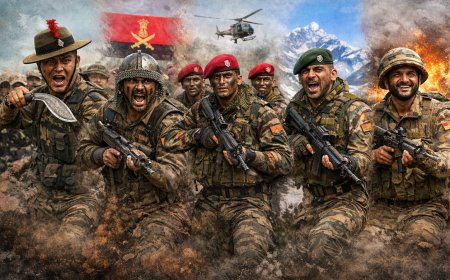
For India, airpower is fundamental to deterrence along contested borders. The ability to swiftly reposition forces, strike critical targets, protect airspace and integrate drones, satellites and cyber tools can help offset numerical disadvantages on the ground. Investments in combat aircraft, force multipliers, air defence networks, long-range precision weapons and hardened infrastructure are therefore essential, not discretionary.
Equally critical is superiority in the electromagnetic and information domains. Modern airpower is inseparable from space, cyber and electronic warfare capabilities. Intelligence, navigation, communications and targeting all depend on these layers. India must build resilience against disruption while developing the capacity to impose costs on adversaries across these domains.
Maritime Power: A Supporting Pillar
Maritime security remains vital for India’s trade routes and energy supplies, but in the evolving strategic context it increasingly supports joint and air-led operations. Sea control and sea denial remain important, yet their effectiveness depends heavily on air cover, maritime surveillance aircraft, satellite networks and integrated command systems.
Rather than focusing solely on fleet size, India’s maritime strategy should prioritise integration—with airpower, space assets and trusted partner navies—to maintain awareness and deterrence across the wider region.
Economic Strength and Strategic Partnerships
Economic resilience has become inseparable from national security. Supply chains, access to advanced technologies and industrial capacity are now instruments of power. India must reduce reliance on single suppliers for critical technologies and defence components while strengthening domestic manufacturing and innovation ecosystems.
At the same time, partnerships are more important than ever. Strategic autonomy does not imply isolation. Closer cooperation with countries such as the United States, Japan, Australia, France and ASEAN members expands India’s strategic choices without locking it into rigid alliances. Flexible, mini-lateral frameworks that deliver concrete outcomes—intelligence sharing, joint exercises and technology collaboration—are increasingly valuable.
The Core Message for India
The central lesson of this new global phase is clear: strength deters pressure. India need not act aggressively, but it must be prepared. Airpower, integrated with space and cyber capabilities, will form the backbone of deterrence in any future crisis. Land forces, naval power, diplomacy and economic policy must align with this reality.
The transformations unfolding today will shape the international order for decades to come. India’s response—calibrated, firm and forward-looking—will determine whether it merely adjusts to a harsher world or actively shapes the balance of power within it.
What's Your Reaction?
 Like
0
Like
0
 Dislike
0
Dislike
0
 Love
0
Love
0
 Funny
0
Funny
0
 Angry
0
Angry
0
 Sad
0
Sad
0
 Wow
0
Wow
0