










Experts Warn of Global Consequences After Trump’s Venezuela Strike and Maduro Capture
Policy experts analyze the implications of President Trump’s military strike on Venezuela and the reported capture of Nicolás Maduro, raising questions over legality, regime change, and long-term US involvement.

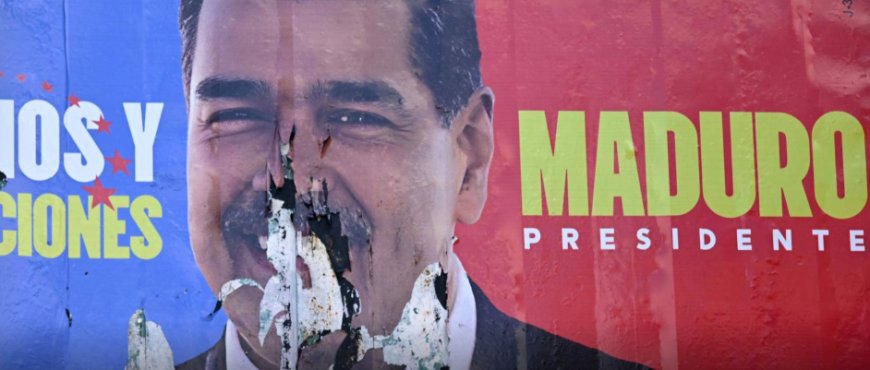
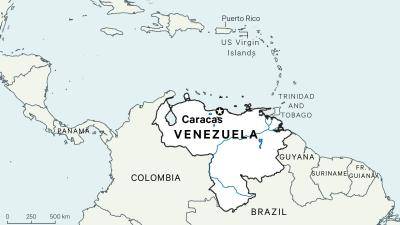
Experts have offered their initial assessments of President Donald Trump’s announcement of a major US military strike on Venezuela and the reported capture of Venezuelan President Nicolás Maduro, outlining serious implications for the United States, Latin America, and the wider international system.
On 3 January, President Trump declared that the United States had carried out a “large-scale” military operation against Venezuela and confirmed that President Nicolás Maduro had been detained. Shortly afterward, US Attorney General Pamela Bondi stated on social media that Maduro and his wife had been charged with drug-related crimes and would be prosecuted in US courts.
Chatham House analysts have provided early, preliminary commentary on the situation, noting that their assessments may evolve as events unfold.
According to experts, the US operation did not come as a complete surprise. Washington’s justification for escalating pressure on Venezuela has gradually shifted over time — moving from an anti-narcotics mission to openly pursuing the removal of Maduro and regime change. After six months of intensified pressure failed to generate enough internal opposition to dislodge the Venezuelan president, a more direct intervention appeared increasingly likely.
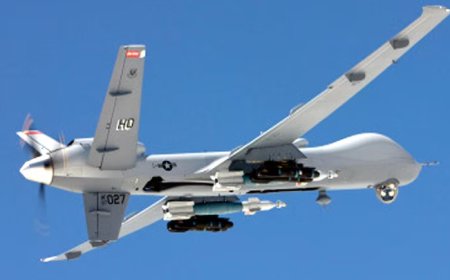
Initial indications suggest that US strikes were concentrated on strategic military assets, including Fort Tiuna, reportedly an unoccupied barracks, along with several air bases and airfields. What has shocked many observers, however, is the reported detention of Maduro and his wife and their transfer to the United States, apparently with the intention of prosecuting them for drug trafficking, crimes against humanity, and related charges.
This development marks a dramatic turning point. Venezuela’s vice president later confirmed, via a phone briefing, that Maduro had indeed been removed from power.
Key questions now arise about whether these actions will achieve Washington’s objectives or whether further military engagement will be required. While limited deployments of US special forces could be used to support precision strikes, analysts believe a full-scale invasion remains unlikely. However, sustaining military operations over time may prove difficult.
Public opinion in the United States has consistently shown opposition to military intervention in Venezuela. Moreover, continued strikes could trigger congressional scrutiny under the War Powers Act, potentially forcing a formal vote in Congress.
Even if some form of regime change occurs — and it is far from certain that any transition would be democratic — US military involvement would likely necessitate prolonged engagement, whether through security assistance, stabilization efforts, or political oversight. Analysts question whether the Trump administration would be willing to commit to such long-term responsibility.
What happens next remains uncertain, but experts agree on one point: President Trump will now be directly accountable for the consequences of US actions in Venezuela.
From a legal perspective, international law strictly limits the use of force as a tool of national policy. Except under a United Nations Security Council mandate or in response to an armed attack, military action is generally prohibited. Humanitarian intervention is sometimes cited, but only in cases of imminent mass atrocities.
None of these legal thresholds appear to have been met in the US operation against Venezuela. Efforts to curb drug trafficking or assertions that the Maduro government functioned as a criminal organization do not, in themselves, provide a lawful basis for armed intervention.
Some precedent exists for international action in defense of democracy. In recent years, African regional organizations have intervened in countries such as Benin following unconstitutional seizures of power. The African Union has also authorized interventions in cases where election results were clearly overturned.
However, these interventions remain controversial and apply primarily to countering military coups or enforcing indisputable electoral outcomes. In Venezuela’s case, both the 2024 presidential election and the parliamentary elections earlier this year were widely criticized as flawed, but the contested nature of the results does not legally justify foreign military action under existing norms.
Historically, the United States has intervened militarily in Latin America to remove governments it deemed illegitimate, including invasions of Grenada in 1983 and Panama in 1989. In those instances, Washington claimed self-defense — a justification largely rejected by the international community.
The Panama invasion led to the capture of President Manuel Noriega, who was transported to the United States and tried on drug charges. US courts relied on the controversial Ker–Frisbie doctrine, which allows criminal proceedings to continue regardless of how a defendant was brought into US jurisdiction, provided they were not subjected to extreme abuse.
Legal experts note that this doctrine could again be applied in Maduro’s case, even if the circumstances surrounding his capture raise serious questions under international law.
What's Your Reaction?
 Like
0
Like
0
 Dislike
0
Dislike
0
 Love
0
Love
0
 Funny
0
Funny
0
 Angry
0
Angry
0
 Sad
0
Sad
0
 Wow
0
Wow
0